

For defense contractors, packaging isn’t just a logistics detail – it’s a contractual and regulatory requirement. Military equipment that enters the Department of Defense distribution system must be packaged in accordance with specific federal standards. Get it wrong and shipments get rejected, contracts get flagged, and mission-critical equipment can arrive damaged or non-compliant.
The two standards that govern most military packaging work are MIL-STD-2073-1 and ASTM D6251. Understanding what each requires – and how they work together – is essential for any contractor shipping defense assets, spare parts, or military-grade equipment.
This guide explains both standards, what they demand from your packaging process, and how Crating Technology’s mil-spec crating services ensure compliance for defense and aerospace clients throughout Arizona.
Key Takeaways
- MIL-STD-2073-1 governs preservation, packaging, and unitization of items entering the military distribution system.
- ASTM D6251 sets the construction and performance requirements for wood-cleated panelboard shipping boxes used in defense packaging.
- Both standards require specific materials, documentation, and testing – not just a sturdy box.
- Defense contractors who package incorrectly risk contract non-compliance, shipment rejection, and equipment damage.
- Crating Technology provides mil-spec crating and packaging services specifically built to MIL-STD-2073 and ASTM D6251 requirements.
What Is Military Packaging?
Military packaging is the process of preserving, packing, and unitizing items destined for the Department of Defense (DoD) supply and distribution system. Unlike commercial packaging, which focuses on cost efficiency and transit protection, military packaging must meet specific federal standards designed to ensure equipment survivability through:
- Long-term storage in varied climate conditions
- Multiple handling points and intermodal transport (air, sea, and ground)
- Deployment environments including forward operating bases and naval vessels
- Extended supply chain cycles where items may sit in inventory for months or years
The standard that governs this entire process is MIL-STD-2073-1, titled “Department of Defense Standard Practice for Military Packaging.”
MIL-STD-2073-1: What Defense Contractors Need to Know
MIL-STD-2073-1 is the primary DoD packaging standard. It applies to any item expected to enter the military distribution system and specifies exactly how that item must be preserved, packaged, and prepared for shipment and storage.
The standard is organized around four core requirements:
1. Preservation method
Preservation refers to protecting the item from deterioration, corrosion, and environmental exposure during storage and transit. MIL-STD-2073-1 specifies preservation methods based on the item’s sensitivity – ranging from desiccant packs and vacuum sealing to vapor barrier bag enclosures and corrosion-inhibiting materials.
For moisture-sensitive or metal components, barrier bags filled with desiccants and sealed under controlled conditions are commonly required. Crating Technology’s vapor barrier packaging services are designed specifically to meet these preservation requirements.
2. Packaging level
MIL-STD-2073-1 defines different levels of packaging protection – A, B, and C – based on the distribution environment the item will travel through. Level A provides the highest protection for the most demanding environments; Level C applies to items that receive minimal handling within controlled domestic routes. The packaging level is typically specified in the contract or item data sheet.
3. Cushioning and interior packaging
The standard specifies cushioning materials, thicknesses, and placement requirements to protect items from shock and vibration. Custom-cut foam inserts built to MIL-STD-2073-1 specifications are one of the most common solutions. Crating Technology fabricates precision foam inserts sized to the exact dimensions of the item being packaged, ensuring compliant interior cushioning for defense and aerospace shipments.
4. Unit packaging and exterior container
MIL-STD-2073-1 also governs the exterior container – the box or crate that houses the preserved and cushioned item. This is where ASTM D6251 becomes directly relevant.
For a comprehensive breakdown of MIL-STD-2073-1 and ASTM D6251 standards, see Crating Technology’s technical reference: MIL-STD-2073 & ASTM D6251 Compliance Guide.
ASTM D6251: The Wood Crate Standard for Defense Packaging
ASTM D6251 is the American Society for Testing and Materials standard for wood-cleated panelboard shipping boxes. It’s the construction and performance benchmark most commonly referenced for the exterior wooden crates used in military packaging.
ASTM D6251 specifies:
- Box construction: The composition of panelboard panels, cleats, fasteners, and reinforcement required for structural integrity
- Performance requirements: Minimum strength ratings for the crate under rough handling, stacking loads, and environmental exposure
- Wood material restrictions: Non-pressure-treated wood and high-density panelboards are required; pressure-treated lumber is prohibited unless specifically contracted
- Testing procedures: Drop tests, vibration testing, and stacking performance verification to certify the crate meets durability standards
Every wood-cleated crate built to ASTM D6251 is stamped with a compliance mark confirming that it meets the standard. This stamp is often required as part of contract documentation.
At Crating Technology, our custom military crates are built using non-pressure-treated wood and high-density panelboards to ASTM D6251 specifications. Crates are marked accordingly so that your packaging documentation is always audit-ready.
Common Military Packaging Mistakes Defense Contractors Make
Non-compliance with MIL-STD-2073-1 or ASTM D6251 is more common than most contractors expect – and the consequences range from shipment rejection to contract penalties. The most frequent issues include:
- Using commercial packaging instead of mil-spec. Standard cardboard boxes, off-the-shelf foam, and commercial shrink wrap do not satisfy military packaging requirements. Each element of the package must meet the standard, not just the outer box.
- Incorrect preservation method for the item class. Applying a Level C preservation method to an item that requires Level A protection due to its sensitivity or distribution environment is a common contractual violation.
- Pressure-treated wood in crate construction. ASTM D6251 prohibits pressure-treated lumber unless specifically required. Contractors using commercially sourced wood without verifying treatment status risk failing inspection.
- Missing or incorrect compliance documentation. Military packaging requires specific markings, certifications, and paperwork. A correctly built crate without the right documentation still fails compliance.
- Inadequate interior cushioning. Loose dunnage or generic foam that doesn’t conform to the item’s geometry fails to meet MIL-STD-2073-1’s cushioning specifications, leaving equipment vulnerable to damage in transit.
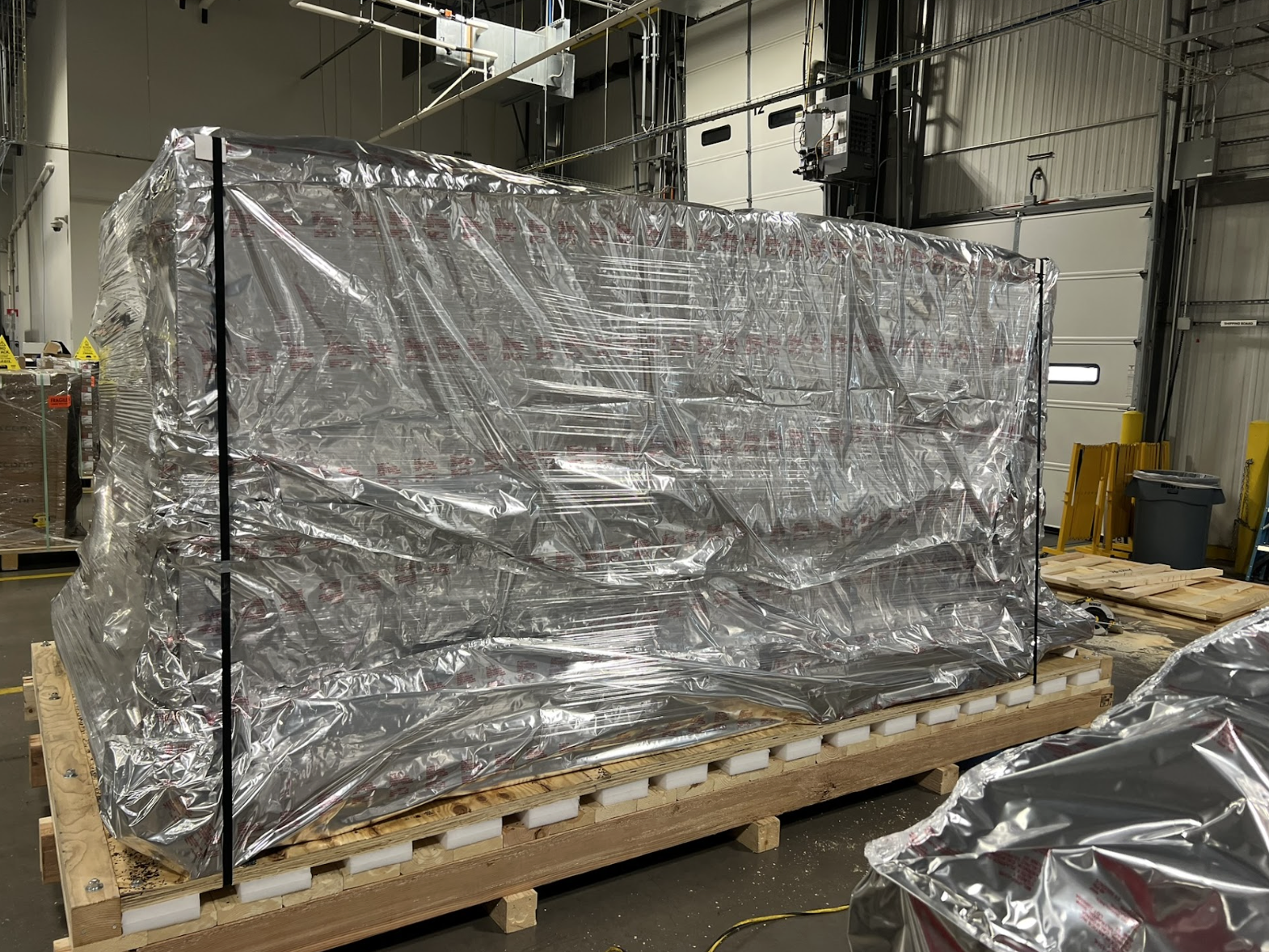
Mil-Spec Crating Services from Crating Technology
Crating Technology provides Military Specification (Mil-Spec) crating and packaging services for defense contractors, government suppliers, and aerospace companies throughout Phoenix and Arizona. Our team is experienced with the documentation, materials, and construction standards required for DoD-compliant packaging.
Our mil-spec services include:
- Custom wood crates built to ASTM D6251 using non-pressure-treated wood and high-density panelboard, stamped and documented for compliance
- Precision foam inserts cut to MIL-STD-2073-1 cushioning specifications for the exact item dimensions and protection level required
- Vapor barrier and desiccant packaging for moisture-sensitive components and long-storage applications – see our vapor barrier packaging services.
- Hard cases and reusable containers for assets that require repeated deployment and repackaging
- On-site crating and packaging for large or installed equipment that cannot be moved to our facility
For full details on our Mil-Spec crating capabilities, visit our Mil-Spec service page or our Defense Industry page.
Related Packaging Needs for Defense and Aerospace Clients
Defense contractors often have packaging requirements that go beyond standard mil-spec crating. Depending on what’s being shipped, additional service areas may apply:
- Aerospace crating. Helicopter blades, avionics, and flight hardware present unique size, weight, and fragility challenges that require engineering-level crate design. See our upcoming guide: Aerospace Crating: What It Takes to Ship Helicopter Blades, Avionics, and Flight Hardware.
- Anti-static and ESD-safe packaging. Electronics, sensors, and guidance systems require electrostatic discharge protection in addition to physical crating. See our upcoming guide: Anti-Static and ESD-Safe Packaging for Electronics Shippers.
- Hazmat crating. Defense shipments involving hazardous materials require UN-rated packaging, DOT compliance documentation, and carrier-specific requirements on top of mil-spec packaging standards.
Frequently Asked Questions
What is MIL-STD-2073-1 and who does it apply to?
MIL-STD-2073-1 is the Department of Defense’s standard practice for military packaging. It applies to any contractor or supplier shipping items that will enter the military distribution system – including spare parts, defense equipment, and military-grade components. If your contract specifies military packaging, MIL-STD-2073-1 is almost certainly the governing standard.
What is ASTM D6251 and how does it differ from MIL-STD-2073?
MIL-STD-2073-1 governs the entire military packaging process – preservation, interior protection, and the exterior container. ASTM D6251 is a more specific standard covering the construction and performance requirements of wood-cleated panelboard shipping boxes. In practice, ASTM D6251 defines what the wooden crate itself must be made of and how it must perform. The two standards are complementary: MIL-STD-2073-1 tells you what to do; ASTM D6251 defines how the crate must be built.
Can Crating Technology provide documentation for mil-spec compliance?
Yes. Crating Technology builds crates to ASTM D6251 specifications and marks them accordingly. We can support your compliance documentation requirements as part of the project. For specific contract documentation needs, we recommend discussing requirements directly with our team at the time of quoting.
Does military packaging always require wooden crates?
Not always. MIL-STD-2073-1 allows for multiple types of exterior containers, including wood-cleated panelboard boxes (ASTM D6251), metal containers, and in some cases hard cases. The required container type is specified by the packaging level and the item data sheet associated with the contract. Crating Technology can advise on the appropriate container type based on your contract requirements.
Do you offer on-site mil-spec crating for large defense equipment?
Yes. For large, installed, or difficult-to-move equipment, Crating Technology can come to your facility and perform packing and crating on-site. Our team has experience working within controlled facilities and will follow all applicable site protocols. Contact us to discuss your project.
The Bottom Line
Military packaging compliance is non-negotiable for defense contractors. MIL-STD-2073-1 and ASTM D6251 set clear requirements for preservation, interior cushioning, and crate construction – and getting it wrong costs time, money, and contract standing.
Crating Technology provides mil-spec crating and packaging services built specifically to these standards. Whether you’re shipping spare parts, precision instruments, or large defense equipment, our team can assess your requirements and deliver fully compliant packaging from design through delivery.
Contact Crating Technology for a free quote: Request a Quote – or call (602) 528-3628.
Related Reading
These related articles cover topics that frequently overlap with military packaging requirements:
• MIL-STD-2073 & ASTM D6251: A Technical Reference – our detailed standards breakdown co-developed with MAC Packaging.
• Aerospace Crating: Helicopter Blades, Avionics, and Flight Hardware – engineering-level crating for the most demanding aerospace shipments (coming soon).
• Hazmat Crating: DOT, IATA, and UN Packaging Compliance – what defense shipments involving hazardous materials require on top of mil-spec packaging (coming soon).


