

At Crating Technology, we believe exceptional protection doesn’t happen by chance — it’s engineered from the ground up. That’s why we rely on CAD design for custom crating. Whether you’re shipping sensitive electronics, oversized assemblies, or mission-critical components, our CAD-first approach ensures your custom packaging is built with intention, not improvisation.
Why CAD Is the Foundation of Smart Crating
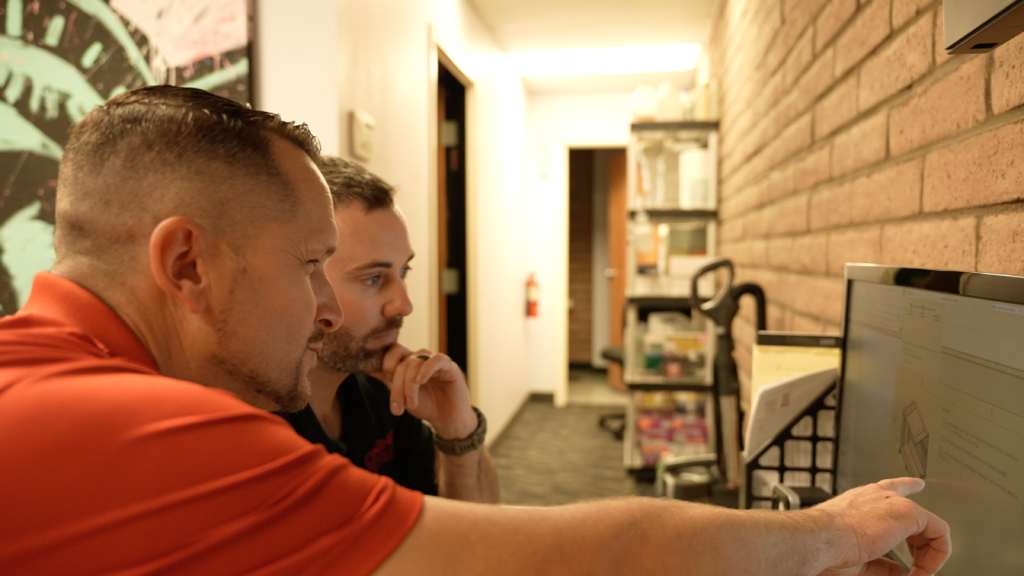
Every successful shipment starts with a strong design — and for us, that means starting with advanced Computer-Aided Design (CAD) software. This isn’t just about visuals; it’s about engineering precision into every angle, bolt, foam cutout, and wood panel.
Why do we prioritize CAD design before the first nail is driven or foam is cut? Because packaging failures are expensive. They risk product damage, project delays, and lost customer trust. CAD allows us to design for prevention, not reaction.
Key Advantages of CAD-Driven Crating
Our in-house engineers design every crate and insert to exact tolerances — ensuring your asset is protected down to the millimeter. Here’s how that benefits you:
- Exact-fit designs for irregular shapes, fragile tech, and multi-part assemblies
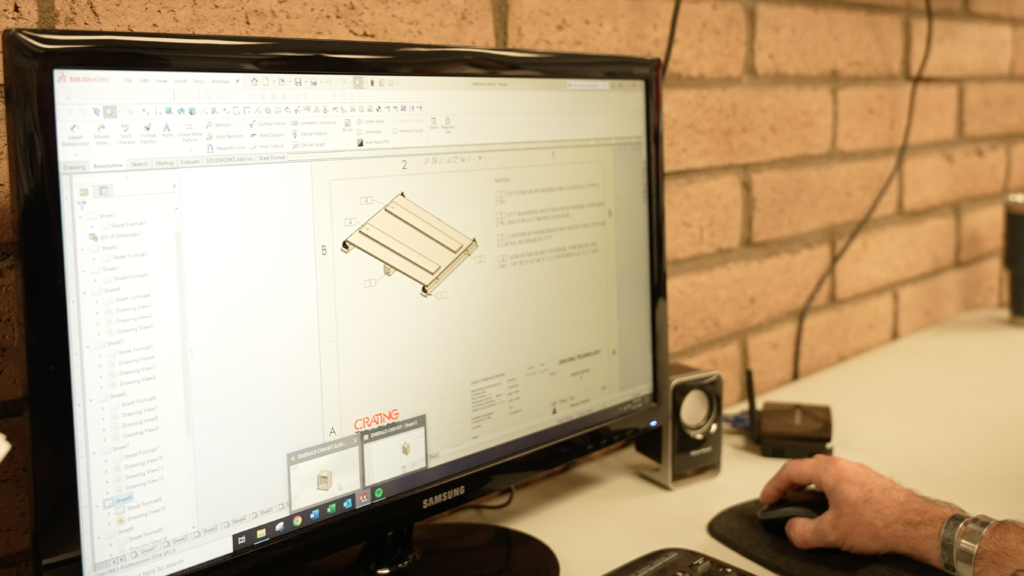
- 3D modeling lets you preview and approve the design before we build — reducing surprises
- Rapid prototyping and fast edits when product specs change mid-project
- Direct integration with your team’s CAD files (STEP, IGES, DWG, etc.), saving time and reducing translation errors
- Scalable for both one-off shipments and recurring production runs
These advantages reduce movement inside the crate, minimize vibration risk, and optimize cube efficiency — all of which directly reduce cost and damage risk.

Engineered for Specific Industries — Not Just General Use
Not all crates are created equal — and they shouldn’t be. Our CAD-based design process ensures every package meets the specific environmental, regulatory, and performance requirements of your industry.
Here are a few ways we tailor solutions through CAD:
- Semiconductors: Cleanroom-compatible packaging, anti-static inserts, and no-particle foam materials
- Aerospace & Defense: MIL-Spec compliance, foam cushioning to absorb G-force levels, and deployable skid mounts
- Data Centers & IT Equipment: Shock-mount systems engineered into the crate base to prevent impact damage during transit
- Medical Devices: Custom foam cavities with dissimilar densities for multi-component protection
- Heavy Industrial Equipment: Reinforced bracing modeled to resist torsional load during over-the-road transport
Using CAD, we’re able to simulate real-world stress conditions and optimize the packaging before we even begin building it.
Built to Ship. Engineered to Protect.
At Crating Technology, we don’t build generic boxes. We engineer transport-ready protection systems. That means every crate is:
- Optimized for shipping mode — air, sea, or ground
- Designed for repeatability — with reusable options available
- Compliant with global shipping standards like ISPM 15 and MIL-STD-2073
CAD makes it possible to match our packaging to your logistics goals, product specs, and compliance needs — with unmatched accuracy.
Ready to Engineer Your Next Crate?
If your project demands precision packaging, partner with a team that doesn’t just build crates — we engineer protection. Upload your CAD files today, and let’s collaborate on a solution that’s optimized from start to finish.
Contact Crating Technology or request a free consultation.


