

If you’ve ever called a packaging company and been asked “do you need packing, crating, or both?” – and weren’t completely sure how to answer – you’re not alone. The terms are often used interchangeably, but they describe two distinct processes that protect shipments in very different ways.
Packing refers to the materials and techniques used to wrap, cushion, and secure an item before it moves. Crating refers to the structural wooden enclosure built around that item to protect it during transit. Both matter. Choosing the wrong one – or skipping one entirely – is one of the most common reasons industrial shipments arrive damaged.
This guide explains exactly what each service involves, when you need one versus both, and the specific scenarios where professional packing and crating together is the only safe option for high-value industrial equipment.
Key Takeaways
- Packing protects a product from within – foam, wrap, blocking, and bracing.
- Crating provides external structural protection – a built wooden enclosure engineered for the load.
- Many industrial shipments require both services working together.
- The choice depends on item value, fragility, weight, shipping method, and destination.
What Is Packing in Shipping?
Packing is the process of preparing an item for shipment using protective materials. It focuses on the item itself – how it’s wrapped, cushioned, blocked, and braced to prevent movement and absorb shock during transit.
Professional packing typically involves a combination of:
- Foam fabrication and custom foam inserts cut to the exact dimensions of the item to prevent internal movement
- Bubble wrap, foam-in-place, or closed-cell foam for shock absorption
- Blocking and bracing to secure items inside a box or crate and prevent shifting
- Vapor barrier bags for moisture-sensitive equipment destined for export
- Anti-static packaging for electronic components and semiconductor equipment
Packing is critical for any item that is fragile, sensitive to vibration, or at risk of surface damage. It is often the first line of protection – applied before a crate is ever built.
Important: Packing alone is typically not enough for heavy industrial equipment, machinery, or items shipping long distances or internationally. That’s where crating comes in.
What Is Crating in Shipping?
Crating is the construction of a custom wooden enclosure – a crate – engineered specifically to support, protect, and contain an item during transit and handling. Unlike a standard cardboard box, a crate is a structural solution. It is designed and built to the exact dimensions, weight, and fragility of the item inside.
Industrial crates are typically built from plywood, oriented strand board (OSB), or solid lumber, depending on the application. They are designed to:
- Withstand forklift handling and pallet jack movement
- Support stacking under load without crushing the contents
- Protect against impact from drops, vibration during transport, and rough handling
- Meet ISPM 15 international phytosanitary requirements for export shipments
- Accommodate Shockwatch or TiltWatch indicators for damage monitoring
Custom crates can range from simple open-frame skid crates for palletized machinery to fully enclosed, foam-lined engineered crates for sensitive aerospace or semiconductor equipment. The design depends entirely on what’s being shipped, how it’s being shipped, and where it’s going.
At Crating Technology, custom crate design is a core service – every crate is engineered to the specific dimensions and requirements of the item, not built from a generic template. Learn more about our custom crate design services.
Packing vs. Crating: Key Differences
The easiest way to distinguish the two: packing happens to the item, crating happens around the item.
Here’s a practical comparison:
Packing:
- Applied directly to the item (wrapping, cushioning, blocking)
- Protects against surface damage, vibration, and moisture
- Uses materials: foam, wrap, desiccants, vapor barrier, anti-static film
- Appropriate for items shipping in existing boxes, cases, or inside a crate
Crating:
- Built around the packed item (external structural enclosure)
- Protects against impact, compression, handling, and forklift loads
- Uses materials: plywood, lumber, OSB, hardware, skids
- Required for heavy machinery, oversized items, international shipments, and anything too large for standard packaging
When Do You Need Packing and Crating Together?
Most industrial and commercial shipments involving high-value equipment require both packing and crating – not one or the other. The crate provides structural protection; the packing inside ensures the item doesn’t shift, vibrate, or sustain surface damage within that crate.
You almost always need both when:
- Shipping heavy or oversized machinery. Equipment like CNC machines, generators, and industrial tools requires a structural crate to handle forklift loads, plus internal foam and blocking to prevent movement.
- Exporting internationally. International shipments face longer transit times, multiple handling points, and ISPM 15 compliance requirements for wood packaging. Both protective packing and a compliant crate are required.
- Shipping sensitive electronics or semiconductor equipment. Anti-static packing, custom foam inserts, and vapor barrier protection inside a structurally sound crate is the industry standard for semiconductor and electronics shipments.
- Relocating manufacturing equipment. Fab relocations and plant moves involve multiple pieces of precision equipment that must arrive in calibrated condition. Proper internal packing prevents damage during the move.
- Shipping high-value items where damage claims must be prevented. A well-documented packing and crating process, combined with Shockwatch or TiltWatch indicators, provides evidence of proper handling if a claim is ever filed.
Not sure whether your shipment needs one or both? Our team at Crating Technology provides assessments and quotes based on your specific item, destination, and shipping method. Explore our on-site crating services – we can come to your location and handle both packing and crating on the spot.
When Is Packing Alone Sufficient?
There are situations where a properly packed item does not require a custom crate. Packing alone may be appropriate when:
- The item is lightweight (typically under 150 lbs) and ships in a standard box or case
- The shipment is domestic, short-distance, and handled minimally
- The item already has adequate structural protection (for example, a hard transit case)
- The shipper’s carrier allows the item without a crate under their freight terms
Even in these cases, proper internal packing – custom foam, blocking, and cushioning – is still critical. “Packing” doesn’t mean dropping something in a box with packing peanuts. For any item with real value, it means engineered protection tailored to that specific piece of equipment.
Why a Crate Without Proper Packing Can Still Fail
A common mistake is assuming that building a crate is sufficient protection on its own. It’s not. A crate without internal packing leaves the item free to shift, vibrate, and impact the crate walls during transit. The result is often damage to the item’s surfaces, connections, or calibration – even when the crate itself arrives intact.
This is especially true for:
- Precision instrumentation and measurement equipment sensitive to vibration
- Electronics and semiconductor tools where electrostatic discharge (ESD) is a risk
- Equipment with protruding parts, connectors, or fragile surfaces
- Items with a long ocean or air freight journey where vibration accumulates over time
The right answer is always a coordinated approach: packing that protects the item from the inside, and a crate engineered to protect it from the outside.
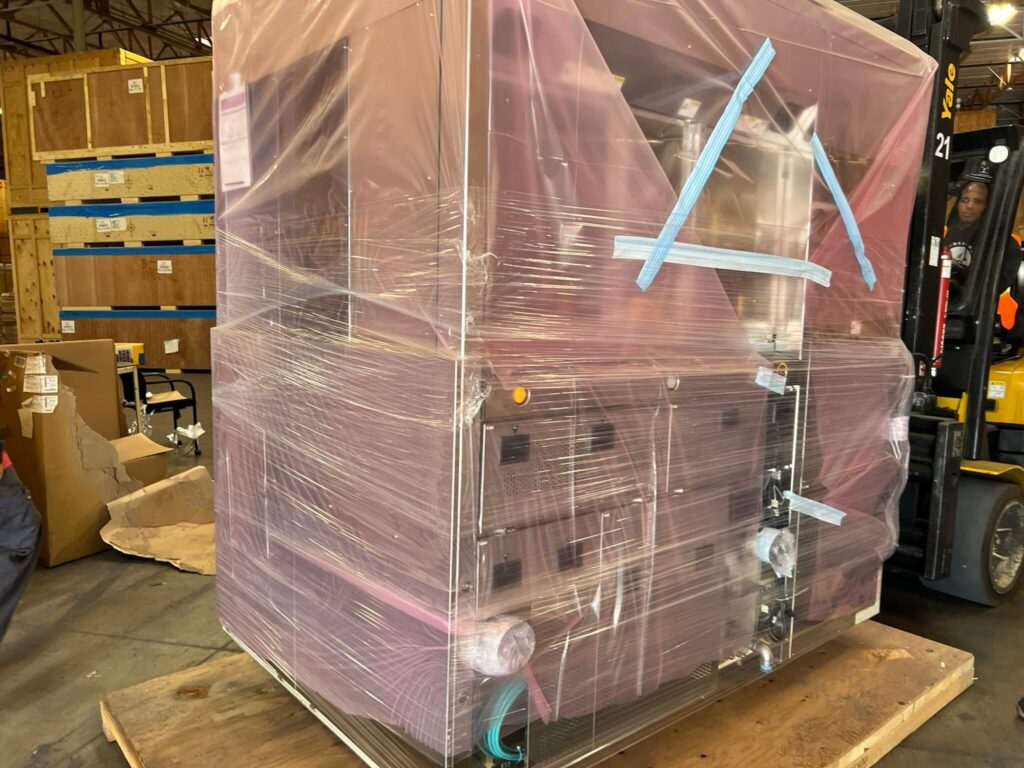
Professional Packing and Crating Services for Industrial Shipments
Crating Technology provides complete packing and crating services for industrial, aerospace, semiconductor, defense, and commercial clients throughout Phoenix and the greater Arizona region. Our team handles both services as an integrated process – assessing your item, designing the internal packing solution, and building the crate around it.
We offer:
On-site packing and crating – our team comes to your facility to pack and crate equipment in place. See our on-site crating services.
Custom crate design – every crate is engineered to the specific dimensions and load requirements of your equipment. See our custom crate design page.
SolidWorks and CAD design – for complex or high-value equipment, we design crates using SolidWorks before a single board is cut.
Custom foam fabrication – precision-cut foam inserts that hold your equipment securely in place.
Fab relocation packing – full packing and crating support for manufacturing and semiconductor facility moves.
Related Reading
If you found this useful, these related articles cover topics that often go hand-in-hand with packing and crating decisions:
• Industrial Crating Services: What to Expect from a Professional Crating Company – a deeper look at what the full crating process involves from assessment to delivery.
• Industrial Wooden Crates: Types, Specs, and How to Choose the Right One – understanding the different crate types and when each is appropriate.
• On-Site Crating Services: How It Works and Why It Reduces Damage Risk – why having a team come to your facility is often the safest option for large or sensitive equipment.
Frequently Asked Questions
What is the difference between packing and crating?
Packing refers to the internal protective materials applied directly to an item – foam, cushioning, blocking, and wrapping. Crating refers to the external wooden enclosure built around the item to provide structural protection during transit and handling. Most industrial shipments require both.
Do I need both packing and crating for a domestic shipment?
It depends on the item. Lightweight items shipping short distances in standard boxes may only need packing. Heavy machinery, high-value equipment, or anything handled by forklift during loading and unloading will typically need both packing and a structural crate.
What industries typically require professional packing and crating?
Industries that most commonly require professional packing and crating include aerospace, semiconductor, defense, healthcare, oil and gas, manufacturing, and data centers. Any industry that ships precision equipment, heavy machinery, or high-value assets typically benefits from engineered packing and crating solutions.
Can Crating Technology handle both packing and crating on-site?
Yes. Crating Technology offers on-site packing and crating services throughout the Phoenix metropolitan area. Our team travels to your facility, assesses the equipment, and handles all packing and crating work in place – eliminating the risk of damage during pre-shipment moves.
What materials are used in industrial packing?
Common industrial packing materials include custom-cut foam inserts, closed-cell polyethylene foam, vapor barrier bags, anti-static packaging film, desiccants, and blocking and bracing lumber. The specific combination depends on the item’s sensitivity to shock, vibration, moisture, and electrostatic discharge.
The Bottom Line
Packing and crating are complementary services, not alternatives. Packing protects the item from within. Crating protects it from outside. For industrial equipment, precision machinery, and high-value shipments, combining both is the standard – not the exception.
Crating Technology provides integrated packing and crating solutions for companies throughout Phoenix and Arizona. Whether you need an off-site crate built to your specifications or a full on-site packing and crating service at your facility, our team can assess your equipment and recommend the right approach.
Contact Crating Technology for a free quote: Request a Quote – or call (602) 528-3628.


