

Precision drives the semiconductor industry, and that precision extends beyond the fab floor. Whether moving a delicate wafer inspection tool across town or shipping a massive lithography machine overseas, success depends on packaging innovations protecting semiconductor manufacturing assets with the same level of control, cleanliness, and care found inside the facility.
Even the smallest threat—a trace of dust, a subtle temperature fluctuation, or a minor shock—can trigger costly downtime or permanent damage. Here are five breakthroughs transforming how semiconductor equipment is safeguarded during storage and transit.
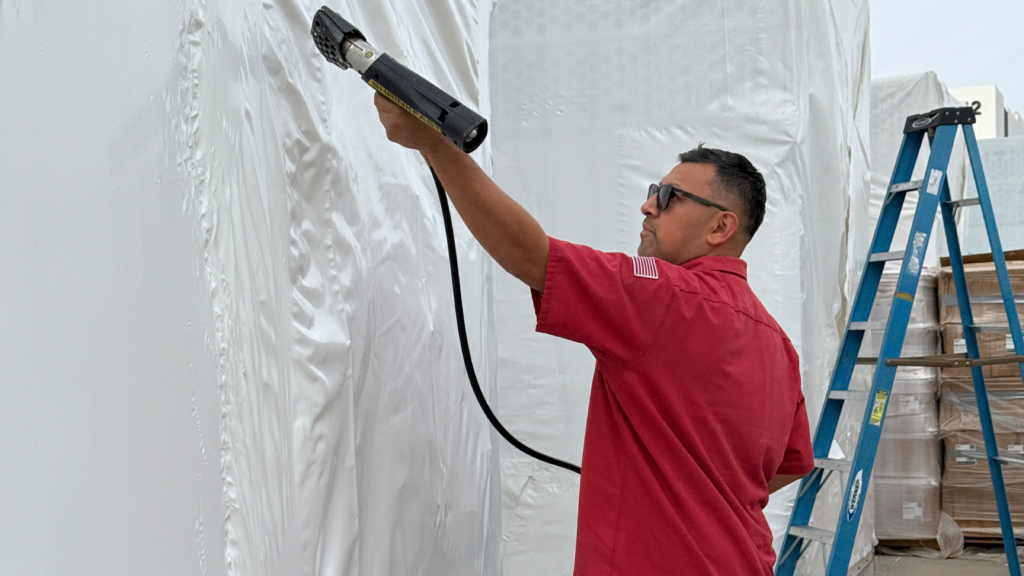
1. Industrial Heat Shrink Wrap with Contamination Control
Standard shrink films protect against weather, but advanced industrial-grade shrink wrap used in semiconductor logistics is engineered for transport and staging environments, not for direct cleanroom use. These wraps are:
- Low-Particulate & Non-Chalking: Designed to minimize surface residue and flaking that could compromise sensitive equipment.
- Anti-Static: Prevents the buildup of electrostatic discharge (ESD) that could damage circuits and connectors.
- UV Resistant: Essential for outdoor storage or transportation in sunny climates like Phoenix, where equipment may be exposed to harsh ultraviolet rays.
- Custom-Fit: Once heat is applied, the wrap conforms tightly to every contour of the equipment, sealing out dust and moisture.
This type of wrapping is ideal for transport and interim storage, keeping multimillion-dollar semiconductor tools protected during crating, staging, and shipping. Upon arrival, equipment is unwrapped and cleaned before entering controlled environments.
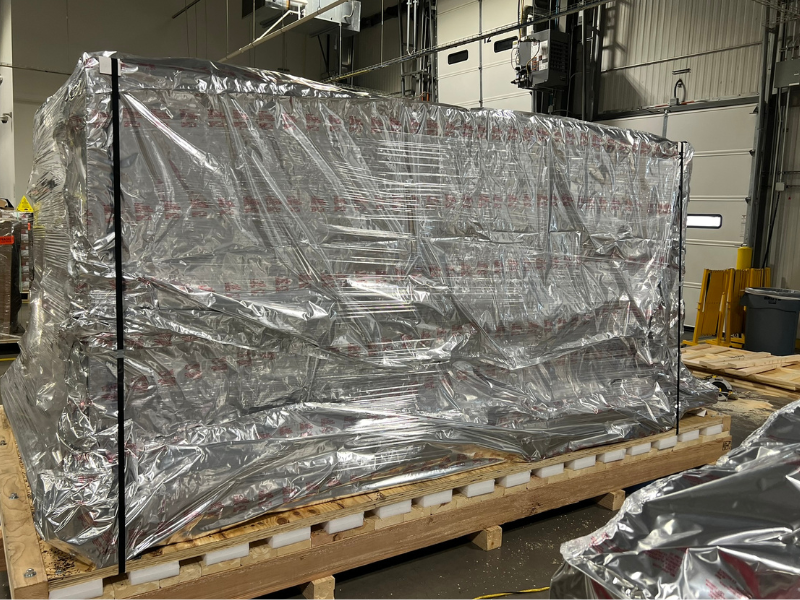
2. ESD-Safe Barrier Packaging
Electrostatic discharge can silently destroy semiconductor components long before a system is powered on. ESD-safe barrier packaging combines multiple layers of protection:
- Static Dissipative Outer Layer: Prevents static buildup during handling or transit.
- Vapor Barrier Layer: Blocks moisture and oxygen that can cause corrosion on delicate metals and connectors.
- Custom Interior Fit: Prevents shifting inside the package, reducing friction and static generation.
For overseas shipments, barrier bags are often heat-sealed after inserting desiccants to maintain an ultra-dry, static-free environment for weeks or months in transit.
3. Precision-Cut Foam Inserts
Foam isn’t just about cushioning anymore — it’s about engineering a perfect fit:
- CAD-Designed Profiles: Foam is cut to match the exact dimensions and contours of each component, whether it’s a control module, wafer stage, or optical assembly.
- Multi-Density Options: Harder foam in load-bearing areas and softer foam in delicate regions provide layered protection against both vibration and compression forces.
- Cleanroom-Compatible Materials: Low-particulate, non-outgassing foams ensure compliance with ISO cleanroom standards.
This approach reduces micro-vibrations during transport, helping maintain precise calibrations and alignments.

4. Shock-Mount Crating Systems
For heavy, high-value semiconductor tools, vibration isolation is critical. Shock-mount crates integrate specialized mounts or suspension systems into the base of the crate:
- Vibration Dampening: Isolates equipment from road shocks, forklift bumps, and crane lifts.
- Calibration Retention: Minimizes the need for recalibration upon arrival, saving time and money.
- Structural Reinforcement: Heavy-duty skids and frame designs ensure stability under high loads and during multiple handling stages.
These crates are especially important for equipment with precision optical systems, where even minor jolts can cause significant misalignment.
5. Climate-Controlled Transport Cases
Some semiconductor assets are highly sensitive to even minor shifts in temperature or humidity. Climate-controlled packaging plays a critical role in protecting semiconductor assets by maintaining consistent environmental conditions throughout the entire journey:
- Insulated Crate Walls: Reduce heat transfer, keeping internal temperatures stable.
- Active Temperature Control: Some systems use integrated heating/cooling units to maintain a precise range, regardless of external conditions.
- Humidity Control: Incorporates desiccants, humidity indicators, or even active dehumidification to prevent condensation and corrosion.
This is especially valuable for long-distance or overseas shipments where cargo may pass through multiple climate zones.
Why These Innovations Are Game-Changers for Protecting Semiconductor Assets
These advancements go beyond simple protection — they help semiconductor companies:
- Reduce Downtime: Equipment arrives protected, calibrated, and ready for post-delivery prep.
- Lower Risk: Minimize the chances of damage during handling, shipping, or storage.
- Stay Compliant: Meet strict ESD handling and ISO cleanliness requirements.
- Protect Investments: Extend the usable life of multi-million-dollar tools.
At Crating Technology, we deliver all five of these innovations under one roof, combining cutting-edge materials with decades of industry-specific experience. Whether you’re moving a single component or relocating an entire fab, we ensure your semiconductor assets arrive in pristine, production-ready condition.
📞 Contact us today to learn how we can engineer a custom packaging solution for your next project.


