

Shipping high-value machinery, sensitive electronics, or oversized industrial equipment comes with risks that ordinary packaging may not be designed to handle.
Equipment can be exposed to moisture, dust, debris, changing weather conditions, and repeated handling before it ever reaches its destination. For valuable or sensitive assets, that exposure can lead to corrosion, contamination, repairs, project delays, or costly downtime.
That is where shrink-wrapping services come in.
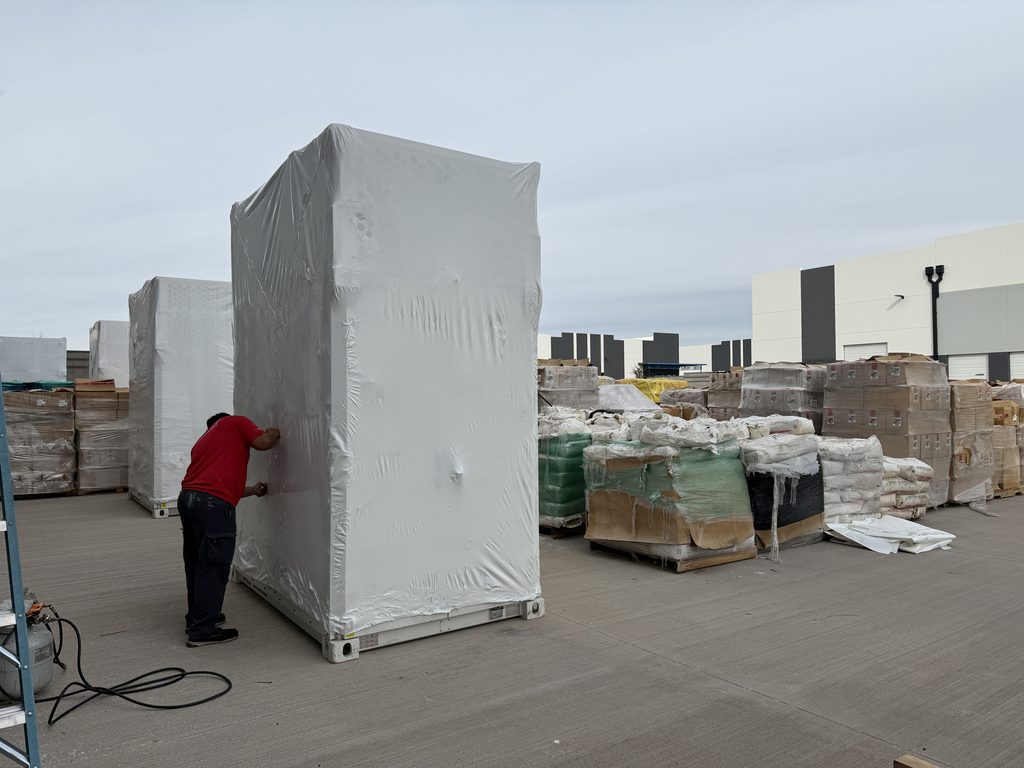
Professional industrial shrink wrapping creates a tightly fitted protective covering around machinery, equipment, components, or even a completed crate. The protective layer can help shield the shipment during transportation, temporary storage, and preparation for domestic or international shipping. Crating Technology provides industrial heat-shrink solutions for machinery, electronics, and large industrial components.
Here are seven reasons professional shrink-wrapping services can make a major difference when valuable equipment needs protection.
1. Your Equipment Has More to Worry About Than a Few Bumps
When industrial equipment travels, impact is only one potential concern.
Depending on where the shipment is going and how long it will be in transit or storage, it may also encounter:
- Rain and humidity
- Dust and debris
- Outdoor exposure
- Temperature changes
- Repeated loading and unloading
- Contaminants during storage
- Abrasion during handling
Industrial shrink wrap creates an additional protective barrier between the equipment and these external conditions. Crating Technology describes its industrial heat-shrink service as protection against environmental hazards such as moisture, dust, and physical damage.
For equipment that is expensive, sensitive, or difficult to replace, that extra layer of protection can be an important part of the overall packaging strategy.
2. Shrink-Wrapping Services Can Handle Equipment That Doesn’t Fit a Standard Box
Industrial equipment rarely comes in convenient dimensions.
A manufacturing system, machine assembly, oversized component, or specialized piece of technology may be too large or irregularly shaped for conventional packaging.
Professional shrink-wrapping services can adapt to the shape and dimensions of the equipment being protected.
That makes industrial shrink wrapping useful for:
- Heavy machinery
- Manufacturing equipment
- Electronics
- Large industrial components
- Specialized assemblies
- Oversized cargo
- Custom-built equipment
Crating Technology uses industrial heat shrink for applications ranging from machinery and electronics to large industrial components.
Instead of making the equipment conform to the packaging, the protective material is applied around the equipment.
3. Moisture Doesn’t Need Much Time to Become a Big Problem
Moisture and industrial equipment are rarely a good combination.
Exposure to humidity or water can contribute to rust, corrosion, contamination, or damage to sensitive components. The risk can become even more important when equipment will spend time outdoors, travel through changing climates, or remain stored before installation.
Industrial shrink wrapping helps create a protective exterior barrier.
For shipments needing more extensive moisture control, shrink wrap can also work as one part of a larger packaging system. Crating Technology notes that export applications may combine an outer heat-shrink layer with crating, vapor-barrier protection, and desiccants depending on the shipment requirements.
In other words, sometimes the shrink wrap is the protection. Sometimes it is one layer in a much bigger protection strategy.
4. It Protects Equipment Even When It’s Not Going Anywhere Yet
Shipping gets most of the attention, but equipment can also be vulnerable while sitting still.
Machinery may spend days, weeks, or longer waiting in:
- Warehouses
- Manufacturing facilities
- Outdoor staging areas
- Construction sites
- Distribution facilities
- Temporary storage locations
During that time, equipment can still be exposed to dust, moisture, debris, and changing environmental conditions.
That is why shrink-wrapping services can be useful for both transportation and storage. Crating Technology specifically positions its industrial heat-shrink service for protecting sensitive and valuable equipment during both shipping and storage.
Protecting equipment before it moves can be just as important as protecting it while it moves.
5. Sometimes the Crate Needs Protection Too
Here is something that is easy to overlook: shrink wrapping does not always have to replace crating.
The two can work together.
A custom crate can provide structural protection, while industrial shrink wrap can add an exterior layer against environmental exposure.
For challenging shipments, a packaging strategy may combine:
- Custom crating
- Blocking and bracing
- Foam protection
- Vapor barriers
- Desiccants
- Industrial shrink wrapping
Crating Technology has used industrial heat-shrink overwrap on custom crates for shipments exposed to demanding environments and has also used heat-shrink film as an exterior protective layer for specialized equipment during transit.
The result is not simply a wrapped crate. It is a layered packaging system designed around the risks of the shipment.
6. Export Shipping Can Make Protection Even More Important
International transportation can expose equipment to a much longer journey.
A shipment may move through trucks, warehouses, freight terminals, ports, containers, and multiple climates before it reaches its final destination.
For export shipments, shrink wrapping can provide supplemental weather protection while other packaging components handle structural support and interior preservation.
Crating Technology explains that industrial heat shrink can be incorporated into an export packaging solution alongside an export-compliant crate and interior moisture protection when required.
That makes shrink-wrapping services especially useful when equipment needs additional protection across complex logistics environments.
7. Because Replacing Damaged Equipment Is a Terrible Shipping Strategy
Packaging is easy to think about as an expense.
Damage is more expensive.
When valuable machinery or specialized equipment arrives compromised, the consequences can extend beyond the item itself.
Potential problems include:
- Repair costs
- Replacement costs
- Installation delays
- Production interruptions
- Missed project deadlines
- Additional freight expenses
Professional shrink wrapping is designed to reduce exposure to avoidable environmental and handling risks.
For high-value shipments, protecting equipment before it leaves can be far more practical than dealing with damage after it arrives.
What Are Shrink-Wrapping Services?
Shrink-wrapping services are professional packaging services that use heat-activated industrial film to create a tight protective covering around machinery, equipment, cargo, or crated shipments.
Once positioned around the item, the material is carefully heated so that it contracts and forms a secure exterior layer.
Industrial shrink wrapping can help protect equipment from:
- Moisture
- Dust
- Debris
- Weather exposure
- Abrasion
- Contamination
Crating Technology’s industrial heat-shrink process is designed to form a close-fitting protective layer around valuable and sensitive equipment during transportation and storage.
How Do Industrial Shrink-Wrapping Services Work?
Step 1: Evaluate the Equipment
The first step is understanding what needs to be protected.
The packaging approach may depend on:
- Equipment dimensions
- Shape
- Transportation method
- Storage conditions
- Environmental exposure
- Additional packaging requirements
A large machine stored outside temporarily may require a different solution from sensitive equipment being packed inside an export crate.
Step 2: Prepare the Equipment
Before the outer shrink film is applied, the equipment may require additional protective measures.
Depending on the shipment, these can include moisture-control materials, cushioning, blocking and bracing, or other protective packaging.
For moisture-sensitive applications, Crating Technology can integrate desiccants before the enclosure is sealed.
Step 3: Apply the Industrial Shrink Film
The shrink-wrap material is positioned around the equipment or packaging system.
Heat is then applied carefully so the material contracts around the item and creates a tight protective covering.
Step 4: Inspect the Finished Protection
The finished wrap should provide consistent coverage around the equipment and be appropriate for the expected storage and transportation environment.
The result is a protective exterior layer ready to support the next stage of the equipment’s journey.
Shrink Wrapping vs. Traditional Packaging: What’s the Difference?
| Traditional Packaging | Industrial Shrink Wrapping |
| Often designed for standard-size items | Adapts to large and irregular equipment |
| May provide basic exterior coverage | Creates a close-fitting protective barrier |
| Can be difficult for oversized machinery | Suitable for many specialized industrial applications |
| Often focused primarily on transportation | Can support transportation and storage protection |
| May be used independently | Can complement custom crating and other protective packaging |
The right solution depends on the equipment.
In many industrial applications, shrink wrapping and crating are not competing options. They perform different jobs and can be combined when the shipment requires both structural and environmental protection.
What Equipment Can Be Professionally Shrink-Wrapped?
Professional shrink-wrapping services can be used for a wide range of industrial assets, including:
Industrial Machinery
Large manufacturing machinery can be wrapped to help protect exposed surfaces from environmental conditions during relocation, shipping, or storage.
Electronics and Sensitive Equipment
Industrial electronics and specialized systems may benefit from an additional exterior barrier against dust and contamination.
Heavy Equipment
Large and irregularly shaped assets can often be shrink-wrapped even when conventional packaging would be difficult to apply.
Industrial Components
Individual components, assemblies, and production equipment can be protected while waiting for shipment or installation.
Custom Crates
Shrink film can also be applied over a completed crate when an additional exterior weather barrier is appropriate.
Crating Technology provides industrial heat-shrink protection across multiple equipment types and has applied the method to both exposed equipment and completed crating systems.
Which Industries Use Shrink-Wrapping Services?
Industrial shrink wrapping can be useful anywhere valuable equipment needs protection from transportation or environmental exposure.
Common applications include:
Semiconductor and Advanced Manufacturing
Sensitive manufacturing equipment can require protection from dust, moisture, and contamination throughout transportation and storage.
Aerospace and Defense
Large components, assemblies, and specialized equipment may need layered protection during handling and transportation.
Energy and Power
Energy equipment can be large, heavy, and exposed to challenging environments. Crating Technology includes industrial heat-shrink wrapping among its protective packaging services for energy equipment.
Industrial Manufacturing
Manufacturers can use shrink wrapping when relocating machinery, preparing equipment for storage, or shipping large production assets.
Technology and Electronics
Sensitive technology can benefit from packaging designed to minimize exposure to contaminants and environmental conditions.
Can Shrink Wrapping Be Done at Your Facility?
Yes.
For equipment that is difficult, impractical, or unnecessary to move before packaging, professional shrink wrapping can be performed on-site.
This can be especially useful for:
- Installed machinery
- Oversized equipment
- Equipment awaiting relocation
- Machinery entering long-term storage
- Assets that cannot easily be transported before packaging
Crating Technology offers on-site industrial heat-shrink application for equipment that cannot be moved to its facility.
That means the protection can come to the equipment instead of the equipment having to come to the protection.
When Should You Consider Shrink-Wrapping Services?
Professional shrink wrapping may be worth considering when equipment:
- Will be stored outdoors or in exposed conditions
- Needs protection from dust and debris
- Is too large or irregular for conventional packaging
- Will travel through changing environments
- Requires an additional exterior layer over a custom crate
- Needs temporary protection before installation
- Is being prepared for domestic or international transportation
The key question is simple:
What could the equipment be exposed to before it reaches its final destination?
If moisture, weather, contamination, or environmental exposure is part of the answer, industrial shrink wrapping may be an important part of the packaging plan.
Why Choose Crating Technology for Shrink-Wrapping Services?
Crating Technology provides industrial packaging and crating solutions for valuable, sensitive, heavy, and specialized equipment. Its industrial heat-shrink capabilities can be used for machinery, electronics, large industrial components, storage applications, and complex shipping projects.
Depending on the project, shrink wrapping can also be integrated with other protective packaging solutions, including:
- Custom crating
- Engineered packaging
- Vapor-barrier protection
- Desiccants
- Foam protection
- Export packaging
This allows the packaging strategy to be matched to the equipment instead of relying on a one-size-fits-all solution.
Frequently Asked Questions About Shrink-Wrapping Services
What are industrial shrink-wrapping services?
Industrial shrink-wrapping services use heat-activated protective film to create a close-fitting exterior barrier around machinery, equipment, cargo, or crates during shipping and storage.
What does industrial shrink wrap protect against?
Industrial shrink wrap can help reduce exposure to moisture, dust, debris, weather, contamination, punctures, and abrasion depending on the material and application.
Can large machinery be shrink-wrapped?
Yes. Industrial shrink wrapping can be applied to machinery, electronics, large industrial components, and other oversized or irregular equipment.
Can shrink wrapping be used for outdoor storage?
Yes. Industrial shrink film can be used for temporary outdoor protection when the material and installation are appropriate for the expected conditions. Crating Technology specifically offers UV-stabilized industrial heat-shrink applications for outdoor exposure.
Can shrink-wrapping services be performed on-site?
Yes. Crating Technology can perform industrial heat-shrink wrapping at a customer’s facility when equipment cannot conveniently be transported before packaging.
Is shrink wrapping suitable for export shipping?
Yes, as part of the appropriate packaging system. For export shipments, shrink wrapping can serve as an exterior protective layer while compliant crating and interior preservation methods address structural and moisture-control requirements.
Can shrink wrap be applied over a custom crate?
Yes. Industrial shrink-wrap overwrap can be used around completed custom crates when additional environmental protection is needed. Crating Technology has used this approach for equipment headed into demanding offshore environments.
Is shrink wrapping the same as custom crating?
No. Custom crating primarily provides structural protection and support, while industrial shrink wrapping provides an exterior protective covering. Depending on the shipment, the two solutions can be used together.
Protect Your Equipment With Professional Shrink-Wrapping Services
Industrial equipment may travel hundreds or thousands of miles, pass through multiple handling points, or spend extended periods waiting in storage before reaching its final destination.
The packaging protecting it should be ready for that journey.
Crating Technology provides professional shrink-wrapping services designed to help protect machinery, electronics, oversized equipment, industrial components, and custom-crated shipments from environmental exposure during transportation and storage.
Contact Crating Technology to discuss the equipment you need to protect and find the right industrial packaging solution for your shipment.


