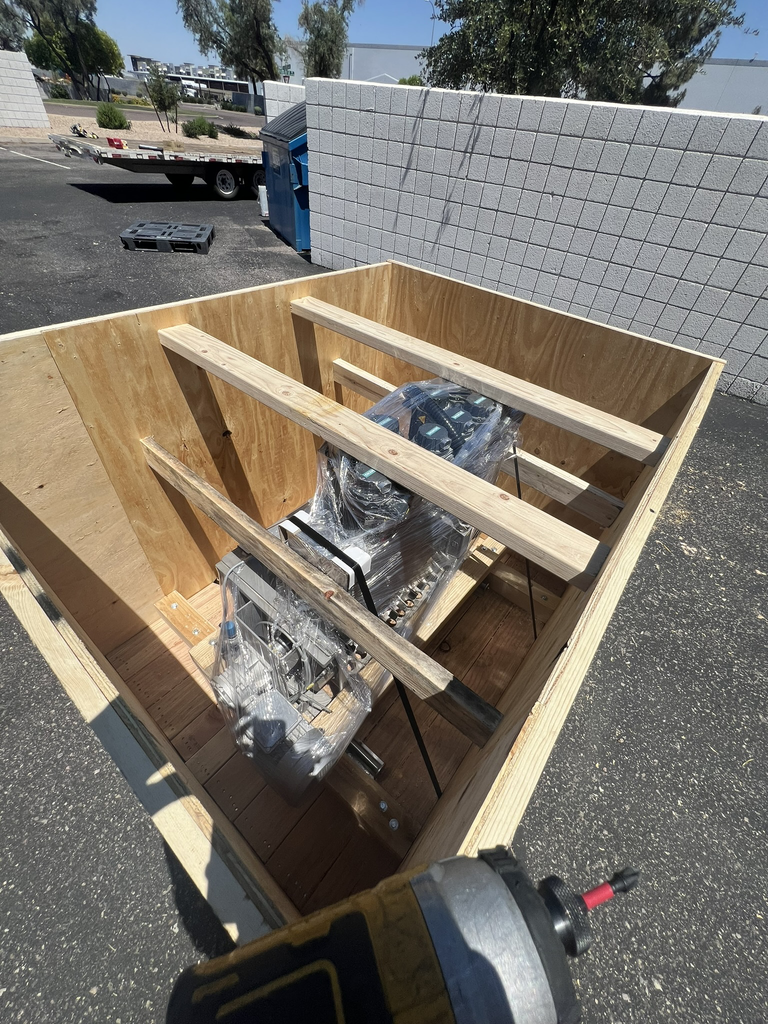

Wooden shipping containers are one of the most effective packaging solutions for heavy, oversized, fragile, high-value, or irregularly shaped industrial freight. They provide rigid structural protection and can be engineered around an item’s dimensions, weight, center of gravity, handling requirements, transportation method, and destination.
For industrial shippers, the question is not simply whether a wooden crate is strong enough.
The better question is:
What type of protection does the equipment need from the moment it leaves the facility until it reaches its final destination?
For machinery and specialized equipment exposed to repeated handling, long-distance transportation, storage, vibration, impact, moisture, or international shipping requirements, a custom wooden shipping container may be the best choice.
What Are Wooden Shipping Containers?
Wooden shipping containers are custom-built crates or enclosed wood packaging systems designed to protect industrial machinery, equipment, components, and specialized freight during handling, transportation, and storage.
Unlike standard cardboard boxes or basic pallets, wooden shipping containers can be designed around specific shipment requirements, including:
- Equipment dimensions
- Total weight
- Weight distribution
- Center of gravity
- Fragility
- Lifting and handling points
- Transportation method
- Storage conditions
- Moisture sensitivity
- Export requirements
Through custom crate design, a shipping container can be developed using equipment specifications, measurements, drawings, or CAD files.
The result is a packaging system built around the freight rather than forcing the freight into standardized packaging.
When Are Wooden Shipping Containers the Best Choice?
Wooden shipping containers are often the best choice when freight is:
- Heavy
- Oversized
- Fragile
- High value
- Irregularly shaped
- Sensitive to shock or vibration
- Difficult to secure
- Traveling long distances
- Being transferred between multiple carriers
- Moving through warehouses or ports
- Stored before or after shipment
- Being shipped internationally
They are commonly used for industrial machinery, semiconductor equipment, aerospace components, data center hardware, medical equipment, automotive components, energy equipment, mining equipment, and other specialized freight.
1. Heavy Industrial Equipment Often Needs Structural Protection
Heavy machinery needs more than surface-level packaging.
The crate must support the equipment while also allowing forklifts, pallet jacks, cranes, or other material-handling equipment to move the shipment safely.
Wooden shipping containers can be built with:
- Reinforced bases
- Structural framing
- Heavy-duty skids
- Blocking and bracing
- Forklift access
- Tie-down points
- Internal supports
These features make wood crating especially useful for machinery with substantial weight, concentrated loads, or unusual weight distribution.
For larger shipments, custom crating solutions for heavy equipment can account for equipment dimensions, weight distribution, lifting points, handling methods, and transportation conditions before the shipment leaves the facility.
Why is blocking and bracing important?
Blocking and bracing help restrict movement inside the crate.
Even if the exterior wooden container remains intact, heavy equipment can still be damaged if it shifts, tips, or moves excessively during transportation.
For this reason, a properly designed shipping container should protect both the exterior of the shipment and the equipment inside it.
2. Custom Wooden Crates Work Well for Irregularly Shaped Freight
Industrial equipment rarely comes in convenient shapes.
A machine may be:
- Extremely tall
- Wider at one end
- Top-heavy
- Asymmetrical
- Equipped with protruding components
- Difficult to place on a standard pallet
- Sensitive at specific contact points
A custom wooden shipping container can be designed around those characteristics.
Instead of leaving vulnerable components exposed or creating excessive empty space inside a generic crate, the structure can be designed around the exact geometry and support requirements of the equipment.
CAD-driven custom crating can also help determine where structural support, internal clearance, blocking, bracing, and access points may be required.
The more unusual the equipment, the more important custom crate engineering becomes.
3. Wooden Shipping Containers Protect Fragile Equipment at Multiple Levels
A wooden crate provides strong external protection, but many industrial shipments require several layers of protection.
Depending on the equipment, the packaging system may also include:
- Custom foam
- Blocking and bracing
- Shock-absorbing materials
- Vapor barrier packaging
- Anti-static packaging
- Protective wrapping
- Custom pallets or skids
- Moisture-control materials
- Desiccants
Each material addresses a different shipping risk.
Wooden framing provides structural protection.
Foam can cushion sensitive components.
Blocking and bracing help prevent movement.
Vapor barrier packaging can help protect moisture-sensitive equipment.
Anti-static materials may help protect sensitive electronics.
For high-value freight, combining these protective systems can provide more comprehensive protection than relying on one material alone.
4. Wooden Crates Are Useful for Freight That Will Be Handled Multiple Times
Industrial freight often passes through several environments before reaching its destination.
A shipment may be:
- Loaded at a manufacturing facility
- Transported by truck
- Unloaded at a warehouse
- Transferred to another carrier
- Loaded into a freight container
- Processed through a port or terminal
- Unloaded at the destination
- Delivered to the final facility
Every transfer increases the opportunity for impact, vibration, movement, tilting, or improper handling.
A rigid wooden shipping container helps maintain consistent protection through these transitions.
Proper load securement is equally important because equipment can still be damaged if it moves excessively inside the crate.
Why are wooden shipping containers good for long-distance freight?
Wooden shipping containers work well for long-distance industrial freight because they provide rigid structural protection and can incorporate internal bracing, cushioning, moisture protection, and custom support systems.
This makes them suitable for freight exposed to repeated handling and changing transportation environments.
5. Wooden Shipping Containers Can Be Built for International Freight
International shipments introduce additional packaging and regulatory considerations.
One of the most important is ISPM 15.
ISPM 15 is an international standard that addresses certain wood packaging materials used in global trade. Wooden crates, pallets, skids, and similar packaging may need to meet treatment and marking requirements depending on the shipment and destination.
Using ISPM 15-compliant crating can help companies prepare wooden packaging for international transportation.
Before exporting equipment, confirm:
- Destination-country requirements
- Whether ISPM 15 applies
- Treatment requirements
- Required markings
- Equipment dimensions
- Gross shipment weight
- Freight container dimensions
- Loading requirements
- Transportation method
- Shipping documentation
For complex exports, international shipment support can help coordinate packaging needs with the broader logistics process.
Do all wooden shipping containers require ISPM 15 treatment?
No.
ISPM 15 applies to certain wood packaging materials used in international trade. Whether it applies depends on the packaging material, destination, and transportation circumstances.
Domestic shipments generally do not have the same international wood packaging requirements.
6. High-Value Equipment Often Justifies Custom Wood Crating
The cost of packaging should be considered in relation to the value and sensitivity of the equipment being shipped.
Examples of high-value freight may include:
- Semiconductor manufacturing equipment
- Aerospace components
- Precision instruments
- Medical equipment
- Defense equipment
- Data center hardware
- Industrial electronics
- Robotics
- Custom machinery
Damage to these items may lead to more than a replacement cost.
Potential consequences include:
- Equipment repairs
- Replacement components
- Production downtime
- Missed installation dates
- Project delays
- Additional freight expenses
- Customer dissatisfaction
- Operational disruption
For this reason, custom crating for high-value industrial equipment should focus on the vulnerabilities of the specific item being transported.
For valuable freight, the shipping container is not simply packaging.
It is part of the shipment’s risk-management strategy.
7. The Best Wooden Shipping Container Is Designed Around How the Equipment Will Move
More wood does not automatically mean better protection.
A well-designed wooden shipping container should reflect the way the equipment will actually be handled and transported.
Before designing a crate, important questions include:
- What does the equipment weigh?
- What are its exact dimensions?
- Where is its center of gravity?
- How is the weight distributed?
- Where can it safely be lifted?
- Are any components particularly fragile?
- Does the equipment contain sensitive electronics?
- Will it travel by truck, air, ocean, or multiple modes?
- Will it be stored indoors or outdoors?
- Does it require moisture protection?
- Is it being exported?
- Does it need shock or vibration protection?
- Will the crate need to be reused?
These details help determine the appropriate base, framing, internal protection, access points, and securing system.
Pallets and skids may also be incorporated into the design to create a stable foundation and provide forklift access.
8. On-Site Crating Helps When Equipment Cannot Easily Be Moved
Sometimes the equipment is too large, sensitive, valuable, or difficult to move to a separate packaging facility before it is protected.
In these situations, on-site crating allows the packaging process to take place at the equipment’s current location.
On-site crating may be useful for:
- Manufacturing machinery
- Semiconductor equipment
- Data center equipment
- Industrial plant equipment
- Equipment relocations
- Large mechanical systems
- Sensitive machinery
- Oversized freight
Instead of transporting the equipment while it is still exposed, the protective crate can be assembled around it before the shipment begins.
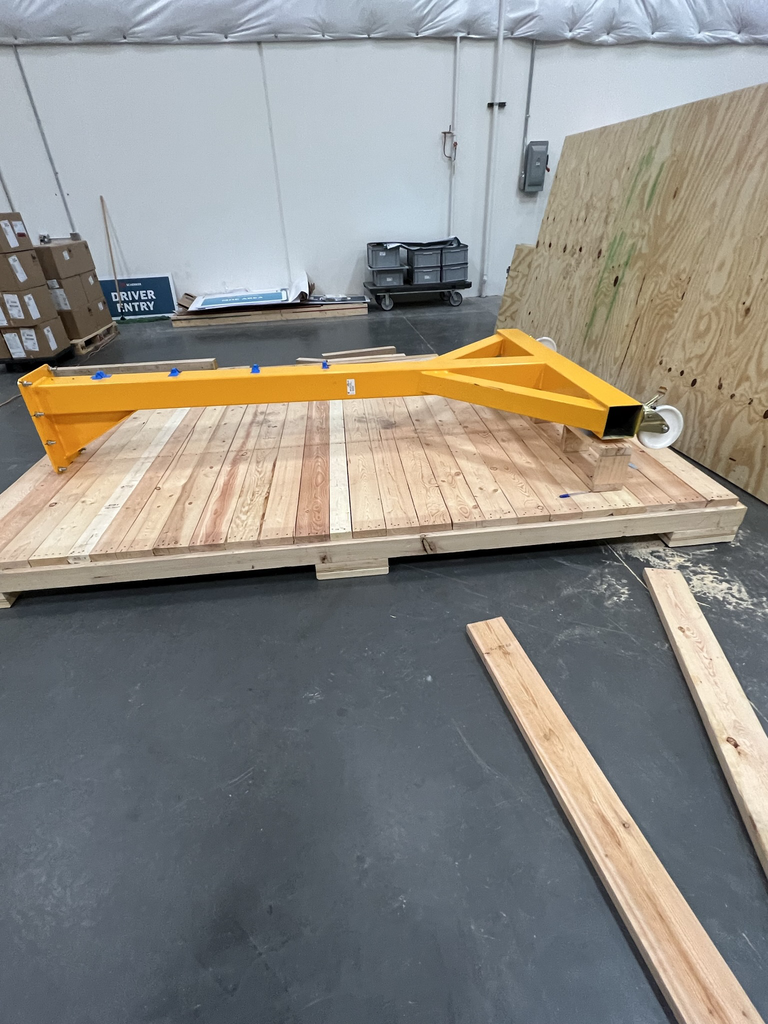
Wooden Shipping Containers vs. Other Industrial Packaging Options
Wooden crates are not always the right packaging solution.
The best choice depends on the freight, transportation risk, handling process, and required level of protection.
| Packaging option | Best suited for |
| Wooden shipping containers | Heavy, fragile, oversized, high-value, irregular, or export freight |
| Pallets and skids | Durable freight requiring a stable base and forklift access |
| Cardboard packaging | Lightweight products with limited structural protection needs |
| Hard cases | Smaller sensitive equipment that may be transported repeatedly |
| Heat shrink wrapping | Large or irregular equipment requiring surface or environmental protection |
| Custom foam packaging | Sensitive parts that require cushioning, separation, or impact protection |
For many industrial shipments, the best packaging solution combines several methods.
For example, machinery may be:
- Mounted to a custom skid
- Secured with blocking and bracing
- Cushioned with foam
- Protected with a vapor barrier
- Enclosed inside a custom wooden crate
This creates multiple layers of protection against different shipping risks.
Wooden Crate vs. Pallet: Which Is Better?
A pallet may be sufficient when freight is durable, stable, easy to secure, and does not require protection on all sides.
A wooden shipping container is usually more appropriate when the equipment needs:
- Full enclosure
- Structural reinforcement
- Internal blocking and bracing
- Moisture protection
- Protection from repeated handling
- Additional security
- Export preparation
- Custom support
If a shipment is heavy but structurally durable, a pallet or skid may be sufficient.
If it is heavy and fragile, expensive, irregularly shaped, or internationally shipped, a custom wooden crate is often the better solution.
What Types of Wooden Shipping Containers Are Available?
Wooden shipping containers can be designed in different configurations depending on the equipment and transportation method.
Common options may include:
- Fully enclosed wooden crates
- Open-frame crates
- Heavy-duty machinery crates
- Skid-based crates
- Reusable wooden crates
- Export crates
- Specialty equipment crates
Companies comparing different designs can review common wood shipping crate types to better understand which construction may fit their shipment.
The correct design should always reflect the weight, size, fragility, handling requirements, and destination of the freight.
What Should a Custom Wooden Shipping Container Include?
A custom industrial shipping container may include:
- Reinforced framing
- Engineered bases
- Heavy-duty skids
- Blocking and bracing
- Custom foam
- Shock protection
- Vapor barriers
- Anti-static materials
- Forklift openings
- Tie-down points
- Ramps
- Access panels
- Secure closures
- Export markings
Not every shipment requires every feature.
The packaging should be engineered around the equipment’s weight, dimensions, center of gravity, fragility, value, handling method, transportation route, storage conditions, and destination.
How Do You Choose the Right Wooden Shipping Container?
To select the right wooden shipping container, start by evaluating the equipment and the shipping environment.
Consider these five factors:
1. Weight and Dimensions
The crate must support the total weight and provide enough clearance for the equipment and internal protection.
2. Fragility and Value
Sensitive or high-value equipment may require foam, shock protection, anti-static materials, or additional internal support.
3. Handling Requirements
Determine how the shipment will be lifted, loaded, unloaded, and transferred.
4. Transportation Method
Truck, air, ocean, and multimodal freight can expose equipment to different handling and environmental conditions.
5. Destination
International shipments may require additional export packaging, treatment, markings, and moisture protection.
Evaluating these factors before fabrication helps ensure the crate is designed for the real transportation environment rather than simply the dimensions of the product.
Frequently Asked Questions About Wooden Shipping Containers
What are wooden shipping containers used for?
Wooden shipping containers are used to protect industrial machinery, equipment, electronics, aerospace components, medical devices, automotive parts, and other heavy or sensitive freight during transportation, handling, and storage.
Are wooden crates good for heavy machinery?
Yes. Properly designed wooden crates can include reinforced framing, engineered bases, heavy-duty skids, blocking, bracing, and forklift openings to support heavy machinery during transportation.
Are wooden shipping containers good for international shipping?
Yes. Wooden shipping containers are commonly used for international industrial freight because they can provide rigid structural protection and accommodate specialized export packaging requirements.
Certain wood packaging materials used internationally may also need to comply with ISPM 15.
Can wooden shipping containers protect equipment from moisture?
Yes, when additional moisture-protection materials are incorporated.
A wooden crate alone is not necessarily a moisture barrier, but vapor barrier packaging, desiccants, protective wraps, and other moisture-control systems can be added when required.
Can wooden shipping containers be custom made?
Yes. Custom wooden shipping containers can be designed around the exact dimensions, weight, geometry, fragility, handling needs, and transportation requirements of the equipment.
What is the difference between a wooden shipping container and a pallet?
A pallet primarily serves as a base for supporting, storing, and handling freight.
A wooden shipping container typically provides a base plus structural protection around the sides and often the top of the shipment.
What is the difference between a wooden crate and a wooden shipping container?
The terms are often used interchangeably in industrial freight.
A wooden crate generally refers to the physical wood structure, while wooden shipping container can describe the broader enclosed packaging system used to protect freight during transportation.
How do I know if my shipment needs a wooden crate?
A wooden crate should be considered when equipment is heavy, oversized, fragile, valuable, irregularly shaped, difficult to secure, internationally shipped, or likely to experience repeated handling.
If several of these conditions apply, custom crating is usually worth evaluating.
Can wooden shipping containers be reused?
Some wooden shipping containers can be designed for reuse. Reusable crate designs may include removable panels, durable hardware, access points, and construction intended for repeated opening, closing, storage, and transportation.
Are wooden shipping containers suitable for ocean freight?
Yes. Wooden shipping containers are commonly used for industrial equipment moving by ocean freight, especially when combined with appropriate blocking, bracing, vapor barrier packaging, moisture-control materials, and export-compliant wood packaging when required.
The Bottom Line
Wooden shipping containers are often the best choice for industrial freight that requires strong structural protection, custom support, or full enclosure during transportation.
They are particularly useful for:
- Heavy machinery
- Fragile equipment
- High-value freight
- Oversized products
- Irregularly shaped equipment
- International shipments
- Equipment exposed to repeated handling
The best shipping container, however, is not simply the strongest crate available.
It is the crate designed around the actual shipment.
A successful industrial packaging solution should consider the equipment’s:
weight, dimensions, center of gravity, fragility, value, handling method, transportation route, storage environment, and final destination.
That is why custom crate engineering and protective packaging work together.
Contact Crating Technology
Need help determining whether wooden shipping containers are the right choice for your machinery or industrial freight?
Crating Technology provides packing and crating services for heavy equipment, high-value machinery, oversized freight, export shipments, and specialized industrial applications.
Depending on the shipment, solutions can include custom crate engineering, on-site crating, pallets and skids, custom foam, vapor barrier packaging, export preparation, and international shipping support.
Whether your equipment is moving across Arizona, across the United States, or internationally, the right packaging strategy starts with understanding how the shipment will be handled from origin to destination.
Contact Crating Technology to discuss your project or request a quote for a custom crating solution.